Article
The future of HR bringing AI, human empathy and business impact together with ETHRWorldSEA, Luz Mercurio and Anirban Dass

Artificial intelligence is reshaping the workplace, creating new opportunities for HR to improve efficiency, strengthen decision-making and deliver better employee experiences. But as organisations accelerate AI adoption, an important question remains.
How can technology advance HR without losing the human connection at the heart of people management?
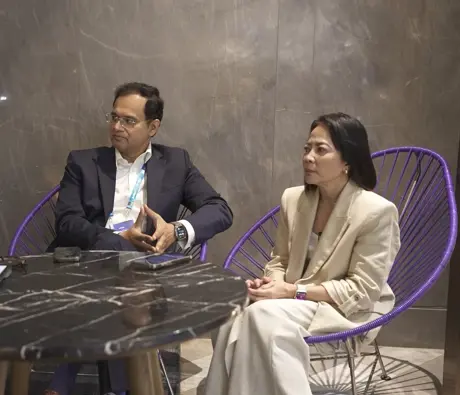
This was a key theme in a conversation between Luz Mercurio, Chief People and Culture Officer at Monde Nissin, and Anirban Dass, Vice President – Payroll & Professional Services, APAC at Strada. The interview was conducted by ETHRWorldSEA at ET Future Forward SEA, exploring how organisations can balance AI-driven efficiency with empathy and human judgement.
Watch the interview with Luz Mercurio and Anirban Dass below
Making AI meaningful for HR
For Luz Mercurio, the value of AI extends beyond automating tasks. It lies in how technology can help people work more effectively while enabling HR leaders to focus on broader business priorities. From supporting performance management to improving commercial capabilities, AI can create opportunities for more informed decisions and stronger collaboration.
However, technology alone cannot replace the understanding required to coach employees, build trust and respond to individual needs. As AI takes on more routine activities, HR leaders have an opportunity to dedicate greater attention to employee development, leadership and meaningful workplace relationships.
The challenge is to adopt AI in ways that strengthen, rather than diminish, the human experience.
Simplifying complexity to unlock strategic value
Anirban Dass highlighted the importance of reducing operational complexity as organisations embrace AI and digital transformation. In areas such as payroll and workforce management, repetitive processes, disconnected systems and complex compliance requirements can consume valuable time and resources.
By improving processes, connecting systems and using automation effectively, organisations can reduce administrative effort and create more capacity for strategic work. This allows HR and payroll teams to move beyond transactional responsibilities towards activities that support workforce planning, employee experience and business performance.
For Strada, technology delivers its greatest value when it simplifies workforce management and enables people to concentrate on work that requires expertise, judgement and collaboration.
Keeping people at the centre of transformation
Both perspectives reinforce a common principle: successful AI adoption requires more than deploying new tools. Organisations must also prepare their people for change, establish trust and ensure technology supports clear business objectives.
While AI can provide insights and improve operational efficiency, human leadership remains essential when navigating sensitive decisions, developing talent and creating an inclusive employee experience. HR leaders must therefore balance innovation with responsible implementation, helping employees understand how technology supports their work.
This also calls for closer collaboration between HR, IT and business leadership to ensure that technology investments translate into measurable outcomes.
Building a more human-centred future for HR
The future of HR will be shaped by how effectively organisations combine technological capability with human understanding. AI can help simplify processes, improve access to insights and create operational efficiencies. Empathy, coaching and human judgement ensure those capabilities translate into better outcomes for people and businesses.
As organisations continue their transformation journeys, the opportunity is not simply to automate more, but to create the capacity for HR to deliver greater strategic value.
At Strada, we believe that connecting people, payroll and technology helps organisations simplify workforce management and unlock new possibilities. Keeping people at the centre of that transformation will be critical to building a more agile, effective and future-ready workplace.